
How to Mix Metal, Wood, and Stone for a Balanced Rustic Look: Expert Design Guide
HOME DECOR
12/31/202510 min read
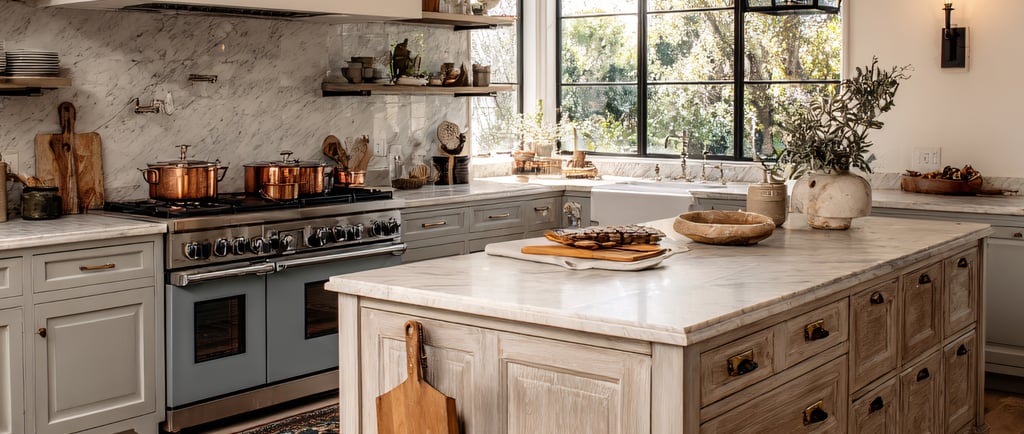
Want to create a space that feels warm and inviting? Mixing materials like wood, metal, and stone can do just that (if you get the balance right).
Wood gives you that cozy comfort, stone brings in weight and texture, and metal adds crisp lines and contrast. Together, they just work.
Pick one material to lead the way, and let the other two play supporting roles. This keeps things from getting chaotic or messy.
When you let one material take center stage, the rest can add layers of interest without fighting for the spotlight.
Nail this balance, and suddenly your room feels grounded, welcoming, and, honestly, a little more you. Rustic charm and industrial flair can blend beautifully in kitchens, living rooms, or bedrooms.
The trick? Knowing where to use each material—and how much of it you actually need.
Key Takeaways
Let one material dominate, with the others as accents for a pulled-together vibe.
Assign each material to specific features or furniture so everything feels intentional.
Mix rough textures and smooth finishes for interest, but don't overwhelm the space.
Core Principles of Mixing Metal, Wood, and Stone
If you want to mix materials well, you need to know how each one works in your room. Start by figuring out which material gets the spotlight, then coordinate their colors and proportions.
Defining Each Material's Role in Rustic Design
Wood anchors rustic design and adds organic warmth. You usually see it in big pieces—think floors, beams, or a hefty dining table.
Reclaimed barn wood, weathered oak, or pine show off natural aging and character. They just feel right for rustic spaces.
Stone brings in a sense of permanence and a ton of texture. Skip polished marble; instead, go for rougher stones like slate, fieldstone, or limestone.
Use stone for fireplaces, accent walls, or countertops where you want a focal point that feels solid and timeless.
Metal gives your room some structure and keeps it from feeling too old-fashioned. In rustic design, blackened iron, aged bronze, or wrought iron just look more authentic than anything too shiny.
Try metal for lighting, cabinet hardware, or furniture frames—small doses work best.
The Art of Proportion and Hierarchy
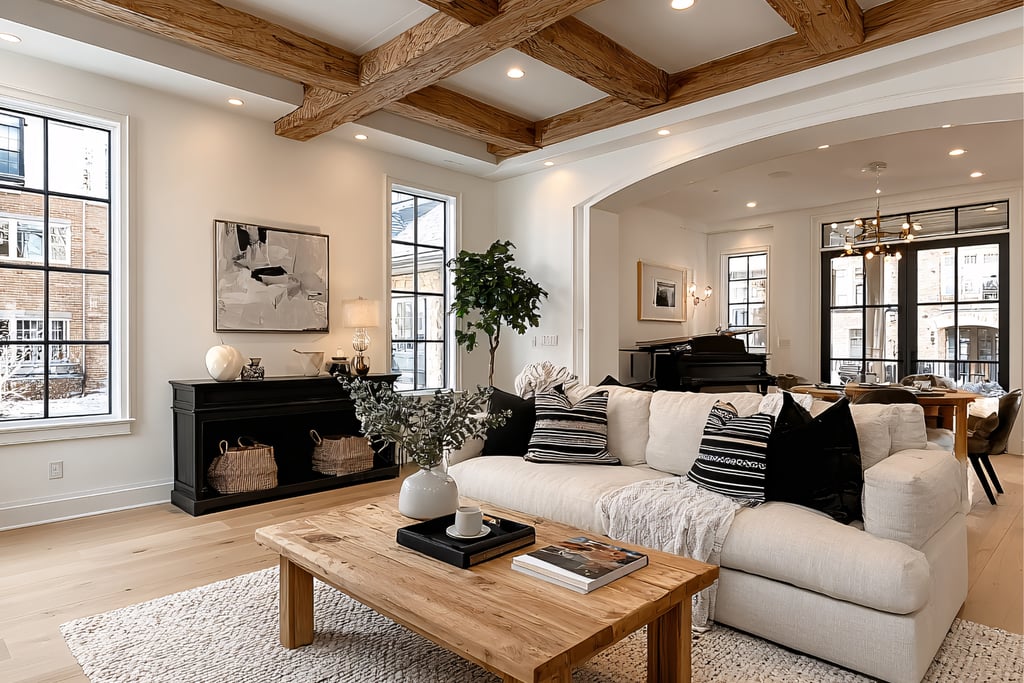
Let your dominant material cover about 60% of what you see. In most rustic rooms, that's wood—floors, walls, big furniture.
Go for 30% with your secondary material. If wood leads, maybe stone shows up as a fireplace or kitchen backsplash.
Metal gets the last 10%. This keeps things balanced and stops the room from feeling like an industrial loft.
Too much metal? The space feels cold. Too little? It falls flat.
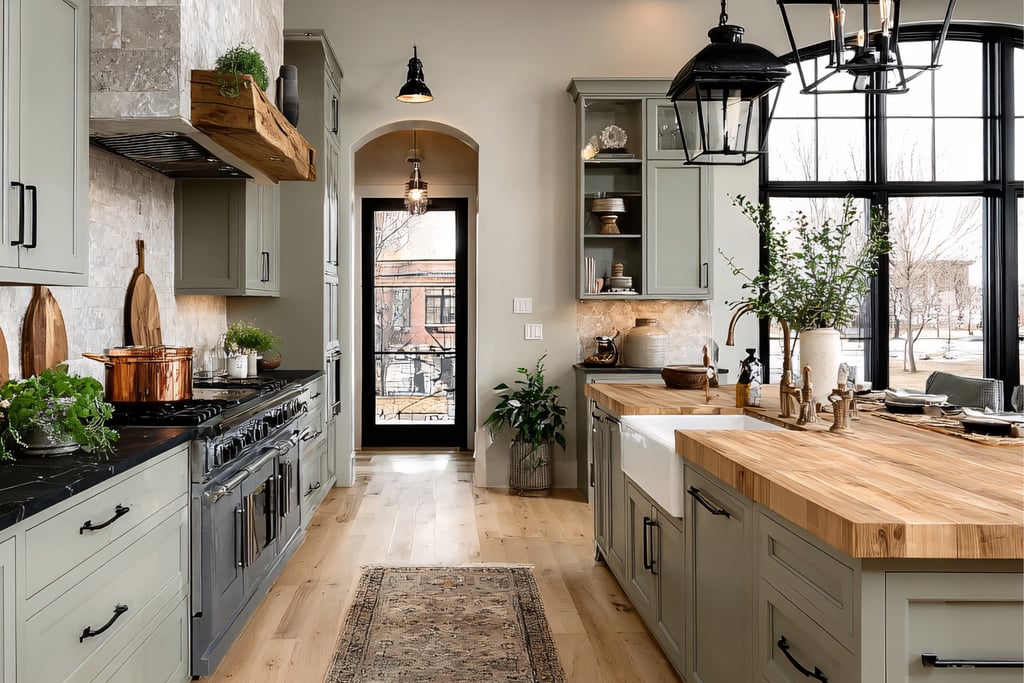
Material Distribution Example:
Wood 60% = Flooring, beams, furniture
Stone 30% = Fireplace, accent wall
Metal 10% = Lighting, hardware, legs
Choosing a Cohesive Color Palette
Stick with materials that share similar undertones. Warm woods like walnut or cherry pair well with aged brass, copper, or oil-rubbed bronze.
Want a cooler vibe? Try gray oak with pewter or blackened steel. For stone, match its undertones to your wood—warm limestone with honey pine, or gray slate with weathered timber.
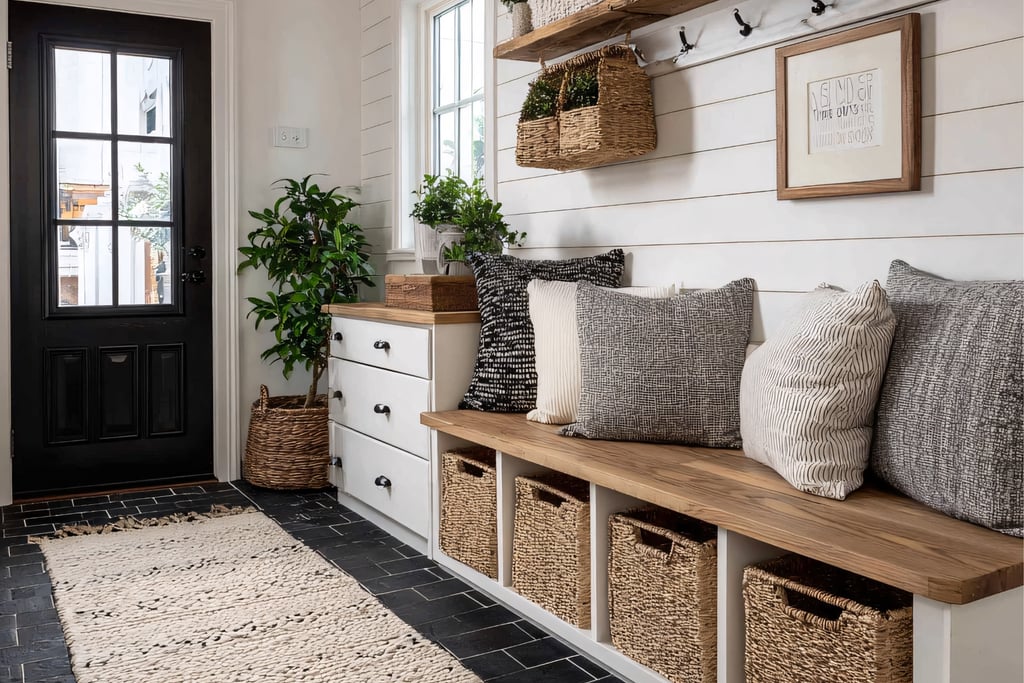
Keep it simple: two to three main colors across everything. A rustic kitchen might have medium-brown walnut cabinets, creamy limestone counters, and black iron hardware. That feels intentional, not busy.
Don't mix warm and cool tones in the same space. Yellow pine and blue-gray stone? They just don't get along.
Selecting and Balancing Key Materials
Balance starts when you pick one material to lead and let the others back it up. That 60-30-10 split keeps things organized and lets each material shine.
Highlighting a Dominant Material
Your main material needs to cover about 60% of the room. Warm wood tones are usually the go-to for a welcoming base.
Try reclaimed wood for floors, chunky ceiling beams, or a big dining table. Weathered wood brings in authenticity, and it pairs easily with metal and stone.
Look for wood with visible grain and imperfections. Wide-plank floors or shiplap walls set the rustic tone right away.
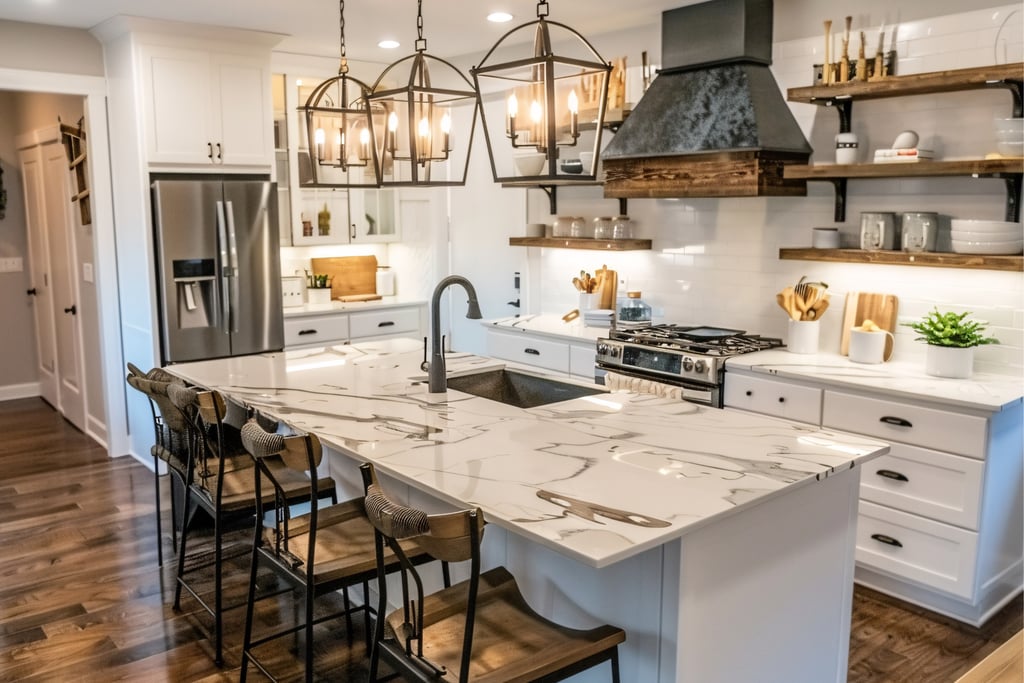
Let your secondary material fill about 30% of the space. Stone fits perfectly here—think fireplace surrounds, accent walls, or a kitchen backsplash.
Stone's texture balances out the wood without stealing the show.
Layering for Texture and Depth
Metal accents fill in the last 10%, and that's where you can have a little fun. Add metal with lighting, hardware, or accent furniture like iron bar stools or steel brackets.
Blackened steel or oil-rubbed bronze just look better with rustic wood than anything too shiny.
Mix up the textures—pair smooth stone with rough wood, or matte metal with glossy wood stains. That contrast keeps things interesting.
Avoiding Overcrowding and Visual Chaos
Limit yourself to two or three wood finishes in one space. Too many can get confusing and lose that cozy vibe.
Try to match undertones—your reclaimed table, oak floors, and walnut shelves should feel like they belong together.
Stick to one or two metal finishes per room. Black iron curtain rods? Use the same finish on cabinet pulls and lights.
Leave some open wall space and don't overdo the decor. Your eye needs a break between all the wood, metal, and stone.
Achieving Rustic Harmony with Metal Accents
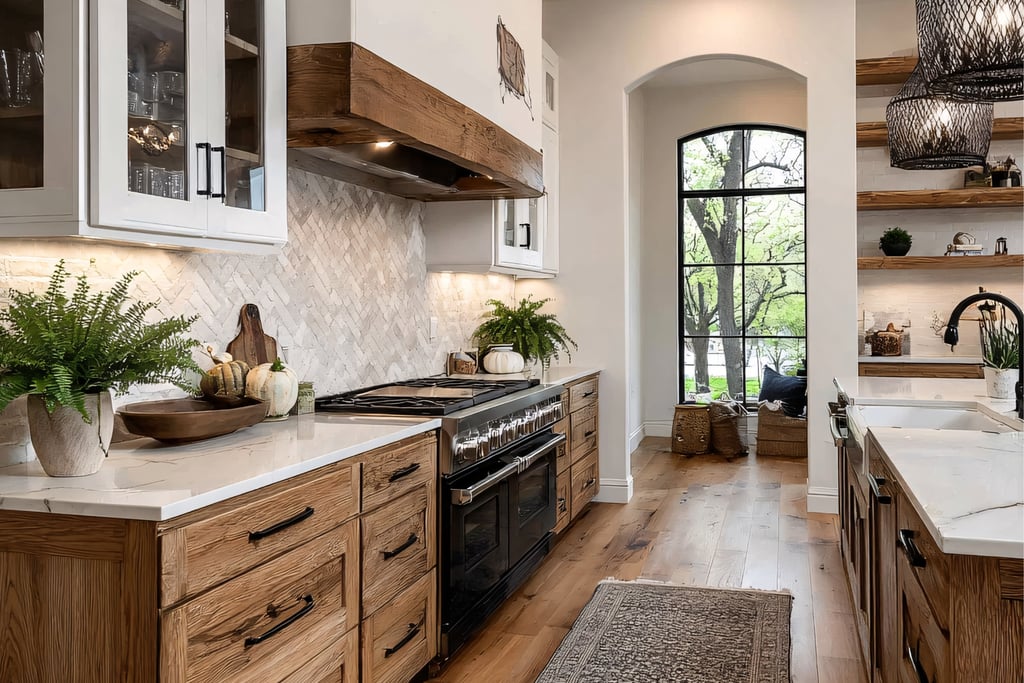
Metal accents bring that industrial edge to rustic spaces, but they also add a lot of character. The right finish can play off wood and stone without stealing the spotlight.
Types of Metal Accents in Rustic Spaces
You can sneak metal in through cabinet hardware, drawer pulls, and handles in wrought iron or oil-rubbed bronze. These touches work great in kitchens and bathrooms.
Shelving brackets in steel or iron support wood shelves and create mixed material furniture that suits both rustic and modern tastes.
Metal basin sinks become focal points in bathrooms, especially paired with wood vanities. Exposed pipes, stair railings, and curtain rods bring a little industrial vibe without a full remodel.
Try picture frames, mirror frames with metal inlays, or wall art in copper or aged steel for a bit of personality.
Common metal accent options:
Door and cabinet hardware
Shelving brackets and supports
Decorative hooks and coat racks
Table bases and chair frames
Wall-mounted organizers
Pairing Metal Lighting Fixtures with Wood and Stone
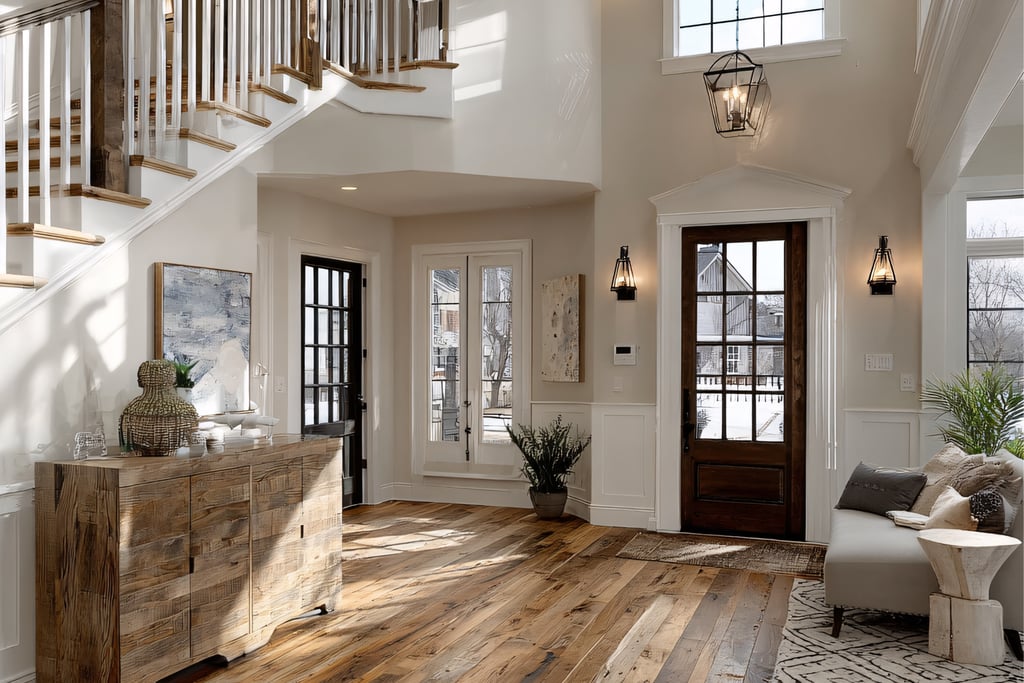
Metal lighting does double duty as a light source and a design feature. Pendant lights in black iron or aged brass look great over butcher block islands.
Chandeliers with exposed bulbs and metal frames pair beautifully with reclaimed wood tables. Wall sconces in bronze or copper highlight stone walls and add cozy light.
Industrial track lighting fits rooms with exposed beams. Choose fixtures that show off the metal—skip painted or powder-coated ones if you want that real rustic feel.
The size of your lights matters, too. Big fixtures suit rooms with tall ceilings and heavy wood; small ones work for more intimate spaces.
Incorporating Brushed Brass and Other Metal Finishes
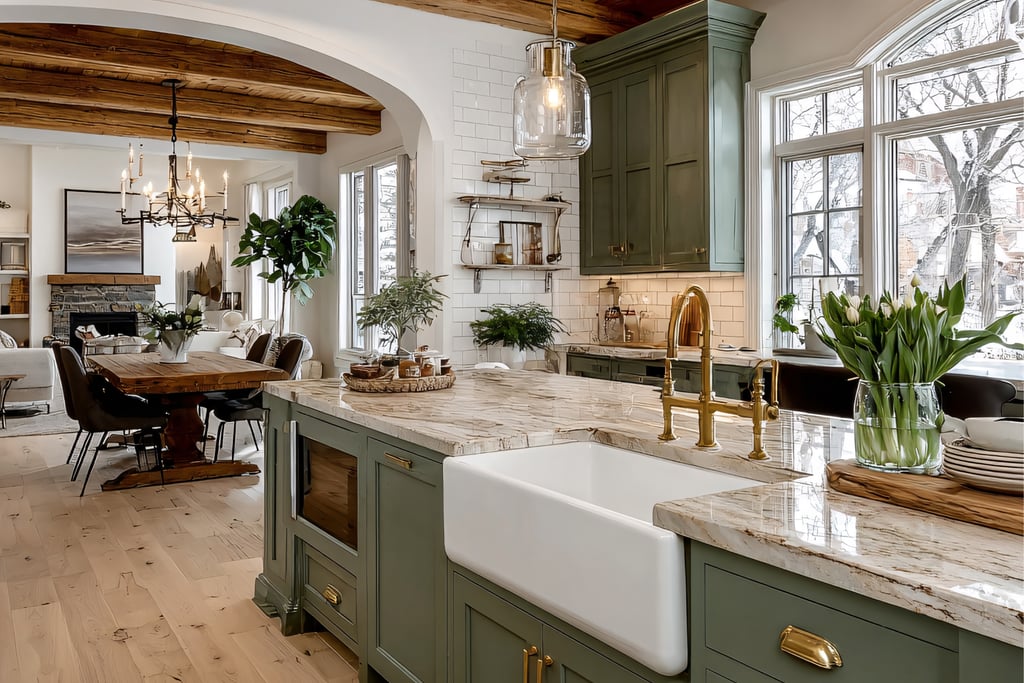
Brushed brass brings warmth and pairs naturally with wood. It's a good pick if you want something softer than black iron.
Try brushed brass for faucets, light switches, and door handles to tie rooms together. Mixing metals can look good if you don't let one finish take over.
Pair warm brass with cool nickel or stainless steel in small doses. Aged copper and oil-rubbed bronze develop a nice patina over time and keep things interesting.
Metal finish characteristics and what they are best paired with:
Brushed Brass
Warm Medium to Dark Woods
Cream Stone
Oil-Rubbed Bronze
Warm Rich Wood Tones
Natural Stone
Black Iron
Cool Light Woods
White Washed Finishes
Stainless Steel
Cool Gray Stone
Bleached Wood
If you're unsure, start small. Try new metal finishes with cabinet pulls or light fixtures before you jump into bigger pieces.
Showcasing Wood: Texture, Tone, and Applications
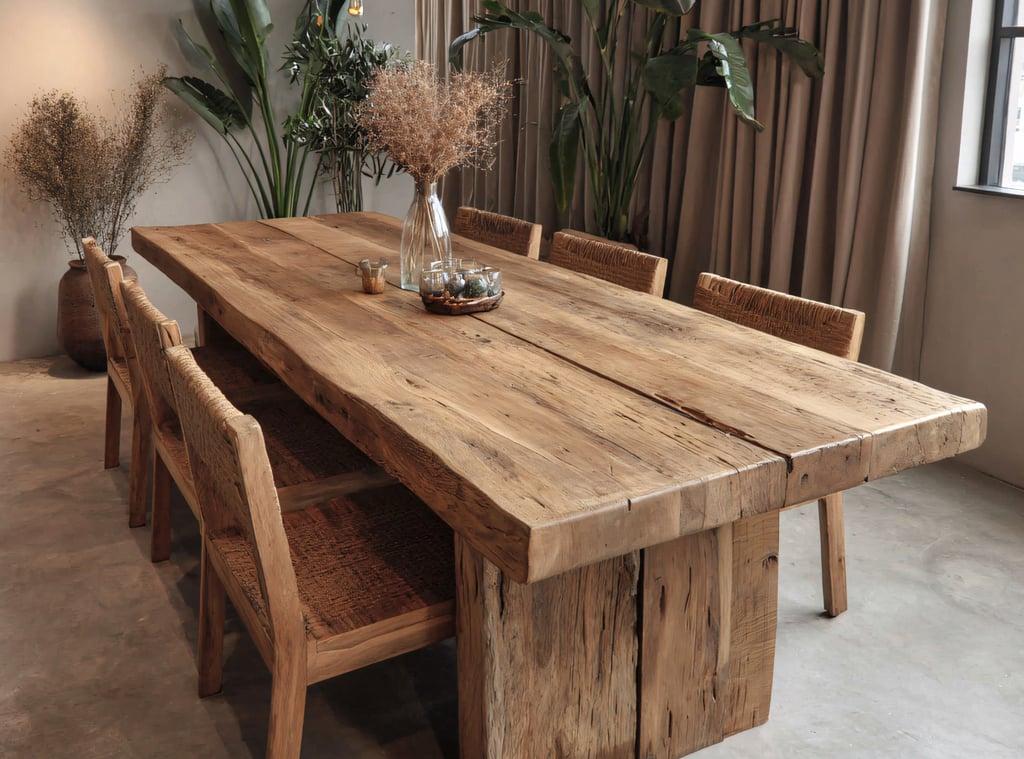
Wood is the heart of rustic interiors. Its grain, color, and texture bring natural warmth and character that just feel right.
Using Reclaimed and Weathered Wood for Authenticity
Reclaimed wood brings instant character. Its patina and history show up in nail holes, saw marks, and wild color variations.
New lumber just can't fake that kind of story. These imperfections add depth and a sense of time to your space.
Weathered wood fits perfectly for accent walls, ceiling beams, or even unique furniture. Gray tones from old barn wood look right at home next to cool metals like steel or iron.
You might find reclaimed materials from old barns, warehouses, or even factory floors. Tracking them down can be a bit of a treasure hunt, honestly.
Common reclaimed wood sources:
Barn siding and beams
Factory flooring
Wine barrels
Railroad ties
Always check each piece for structural integrity before you install it. Some weathered wood needs a good sealing to prevent splinters, but you can still keep that aged look intact.
Integrating Wood Siding Indoors and Outdoors
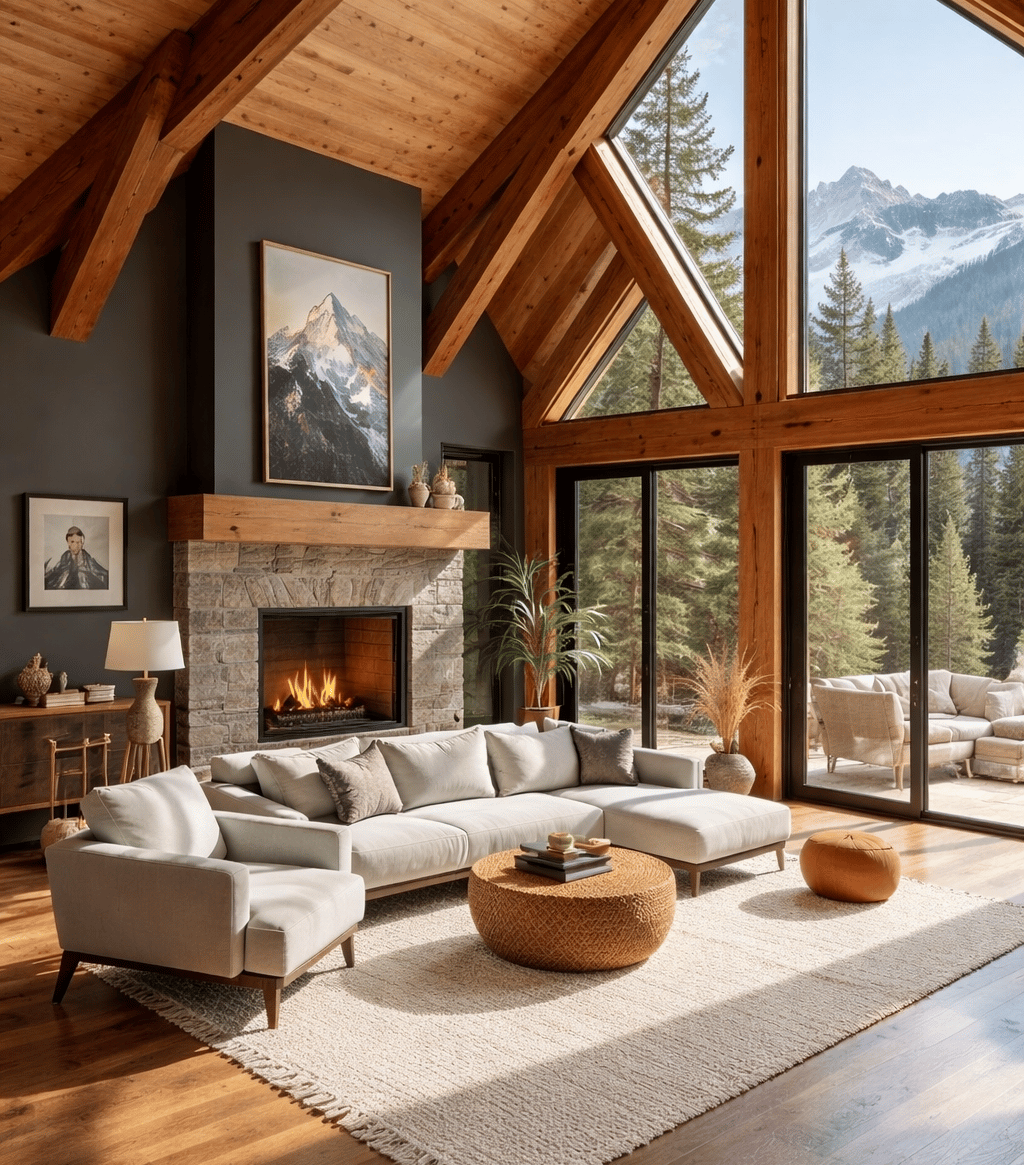
Wood siding helps create a visual flow between inside and outside. Styles like shiplap, tongue-and-groove, or board-and-batten add texture but keep things looking clean.
If you install siding horizontally, you get a classic vibe. Go vertical, and suddenly the ceilings feel taller—who doesn't want that?
Bring wood siding into living rooms, bedrooms, or hallways. Light pine or cedar brightens up shadowy corners, while darker walnut or oak adds richness in sunlit rooms.
Outside, stick to weather-resistant woods like cedar, redwood, or treated pine. Matching or coordinating wood tones inside and out blurs the line between spaces for a truly rustic feel.
Choosing Wooden Cabinets and Open Shelving
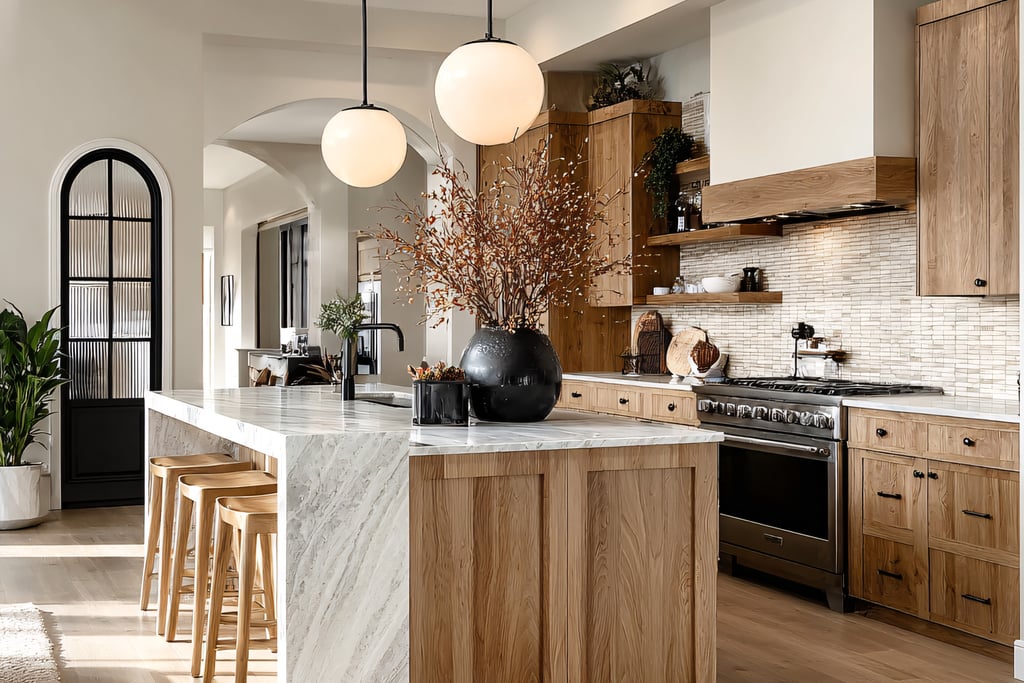
Wooden kitchen cabinets really ground a rustic space. Oak, maple, and hickory are durable and show off those grain patterns everyone loves.
Natural or honey stains highlight the wood's character way better than paint ever could. Painted cabinets just feel a bit too polished for the vibe we're after.
Open shelving—especially in reclaimed or live-edge wood—balances out the heavier look of closed cabinets. You can show off dishes or glassware, and the room doesn't feel weighed down.
Cabinet and shelving combinations:
Full wood cabinets with floating wood shelves
Lower wood cabinets with upper open shelving
Mixed closed and open units in matching wood tones
Warm wood cabinetry pairs beautifully with stone countertops and metal hardware. Try to keep wood finishes consistent in the same room, but mix up where you use closed storage versus open display.
Incorporating Stone Elements for Visual Balance
Stone brings weight and a sense of permanence to rustic interiors. It anchors lighter materials and gives the room something to gather around.
Pick the right stone and put it in the right spot. Otherwise, it can take over your space instead of just grounding it.
Natural Stone and Feature Walls
A stone feature wall gives your room a solid, grounded feel. The choice of stone sets the mood—so don't rush it.
Rough-cut fieldstone feels like a mountain lodge and connects the interior to the outdoors. Stacked stone brings more order but keeps that rustic texture.
Travertine offers warm, earthy tones with natural pitting. Limestone gives you softer beiges and grays. Both are great if you want subtle drama, not a shouty wall.
Try putting your feature wall behind a bed or sofa for a natural focal point. In open spaces, one stone wall can define zones without making things feel boxed in.
Stone Backsplashes and Fireplace Surrounds
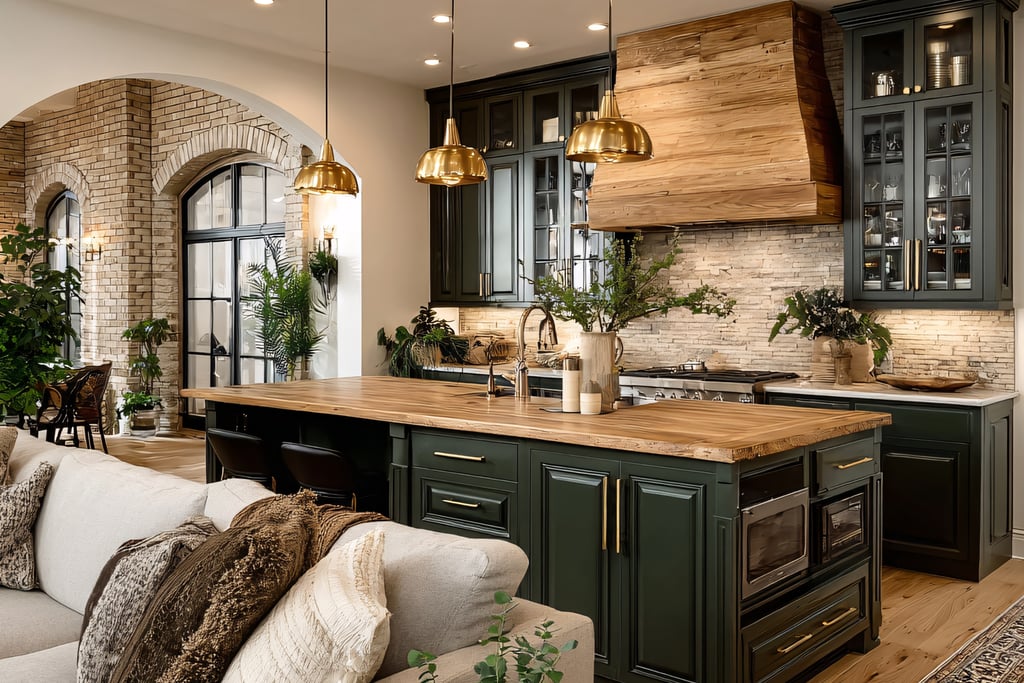
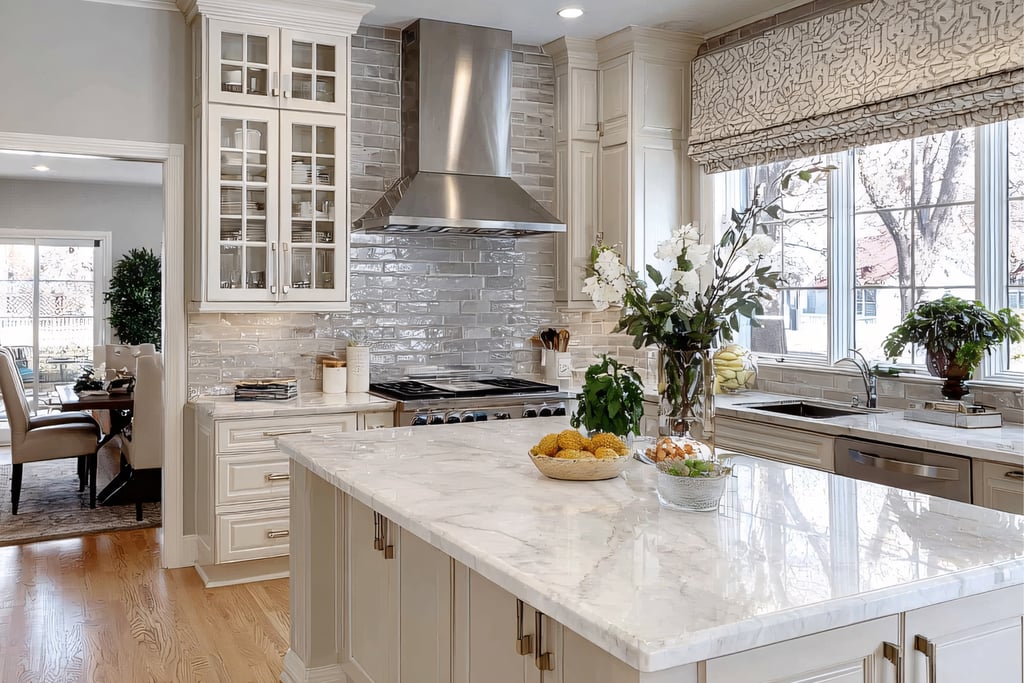
Stone backsplashes are a winner in kitchens—tough, heat-resistant, and full of character. Irregular stone tiles keep things rustic but still practical.
Slate tiles bring moody, dark tones that pop against lighter woods. Tumbled marble has softer edges and feels a bit more lived-in.
For wet areas, pick stones that don't soak up water easily. Fireplace surrounds need bigger stones that can handle the heat, like river rock for a natural look or stacked ledgestone for strong lines.
Let some mortar joints stay recessed. It highlights each stone and adds shadows that shift as daylight moves—kind of magical, actually.
Combining Stone with Wood and Metal Accents
Mixing materials takes a little finesse. Big stone surfaces need big wood partners and metal that's sized to match—not tiny details that get lost.
Pair cool gray stones with steel or pewter metals. They just naturally work together. Warmer stones like honey tones look better with brass or copper.
Wood beams above stone walls create strong visual lines—horizontal and vertical. The roughness of stone makes the wood grain stand out, and vice versa.
Metal fixtures or hardware in between bring some modern structure without killing the rustic feel. Just make sure your metal details are bold enough so they don't disappear against all that stone.
Room-by-Room Inspiration for a Rustic Look
Every room gives you a chance to balance wood, metal, and stone in its own way. Honestly, the trick is picking the right mix for how you use the space—and what feels good to you.
Living Room: Focal Points and Cozy Contrast
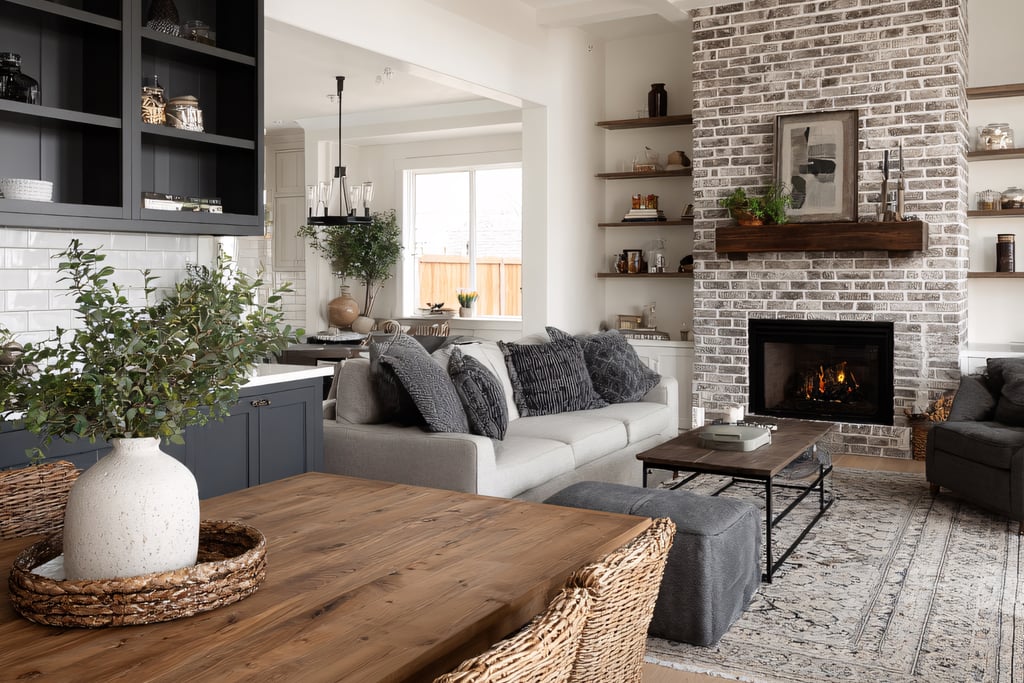
Your living room needs a strong focal point to really sell the rustic look. A stone or brick fireplace grabs attention and adds texture right away.
Pair that fireplace with reclaimed wood beams or a weathered mantel. The warmth of the wood balances out the cool stone.
Metal lighting fixtures—think iron or steel pendants, or lamps with brass accents—bring in the metallic note without overpowering the natural materials.
Mix materials in your furniture, too. A coffee table with a wood top and metal base feels balanced, not forced. Try a slate accent table or a few decorative stones on wood shelves for extra texture.
Kitchen: Cabinets, Islands, and Shelving
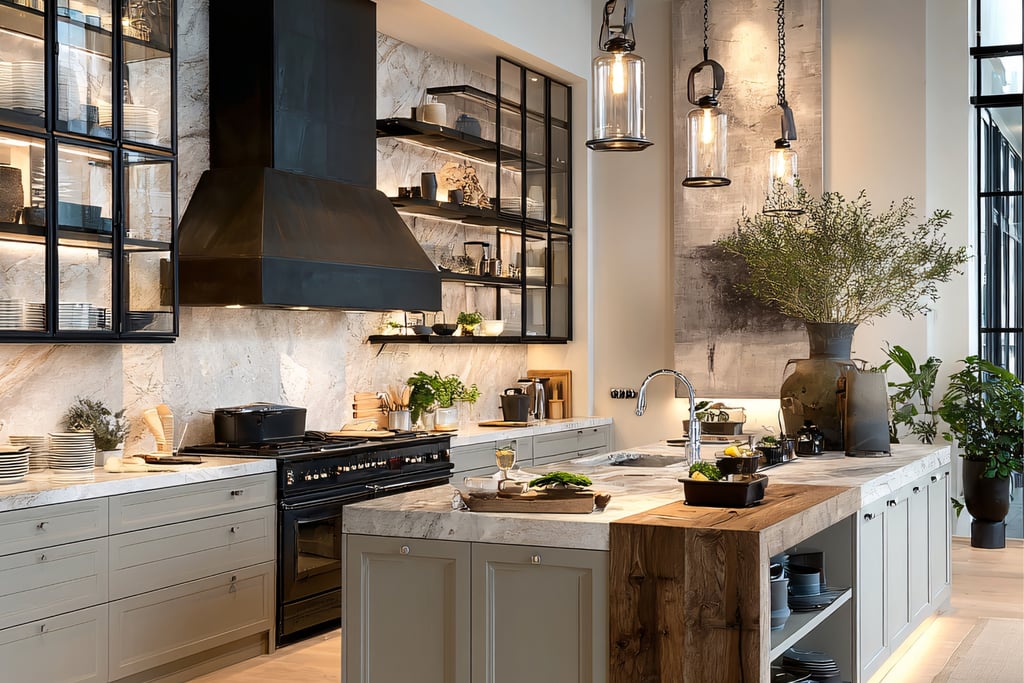
Wooden cabinets are the backbone of a rustic kitchen. Go for visible grain and warm tones that let the wood shine.
A stone backsplash adds texture and protects your walls. Natural stone, slate, or stacked stone all look great behind the stove or sink.
Metal hardware and fixtures round out the look. Use iron pulls, steel faucets, or brass knobs that tie in with your lighting. Open shelving in reclaimed wood with metal brackets keeps dishes handy and the vibe rustic.
Kitchen islands are a fun spot to mix materials, too. Maybe a butcher block top with metal legs, or stone counters on wooden bases. It keeps things interesting and practical at the same time.
Bathroom: Vanities and Accessories
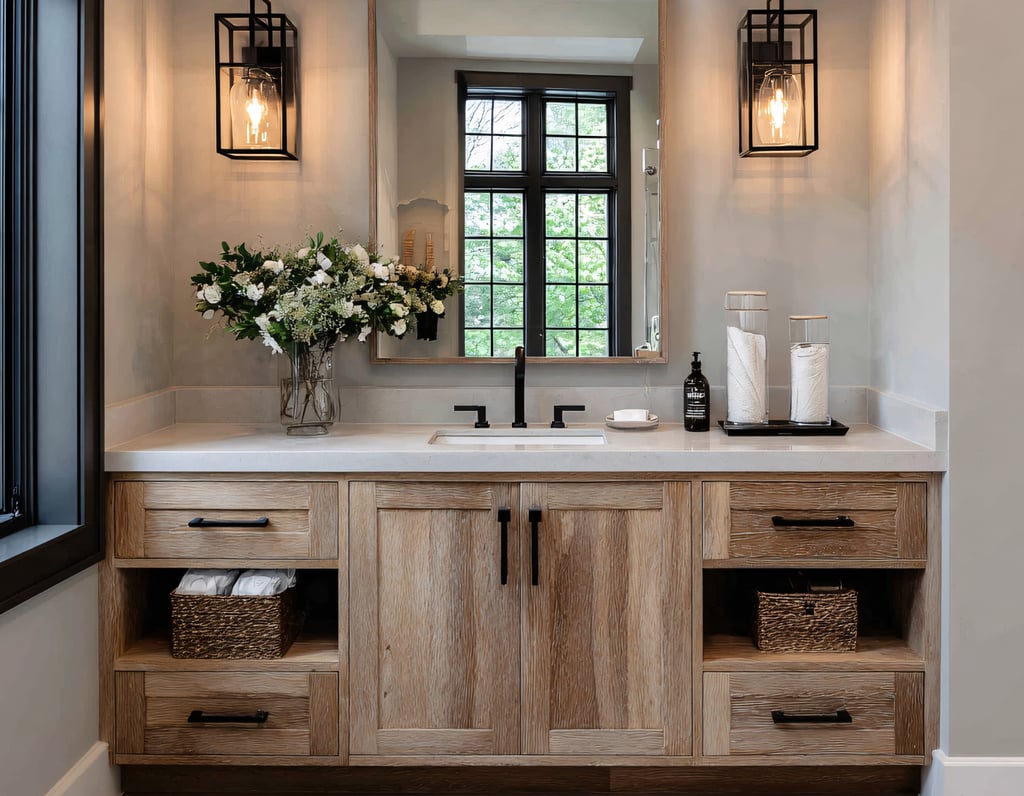
A wooden bathroom vanity with a metal sink basin really stands out and strikes a nice balance between warm and cool vibes. Try picking vanities made from reclaimed or distressed wood if you want to lean into that rustic charm.
Stone vessel sinks offer another way to go besides metal basins. You can set these right on top of wooden vanities—they bring in a bit of nature and still do the job.
Mix in metal faucets, maybe in oil-rubbed bronze or brushed steel. That combo just works.
Got a smaller bathroom? Bring in stone with flooring or maybe an accent wall instead of a bulky vanity. Natural stone tiles or slate floors keep things grounded and handle moisture like a champ.
Metal accessories tie everything together—think towel bars, mirror frames, and lighting. I’d skip the polished chrome and go for aged or matte finishes for a more rustic look.
Wooden shelves with metal brackets? They’re practical, and they help reinforce your whole material palette. That’s a win-win in my book.